Holy Basil
Ocimum tenuiflorum
กะเพรา / Kaphrao(Thai)
Also known as: Holy basil, Tulsi, Tulasi, Sacred basil, Ocimum sanctum
Holy Basil is an aromatic leafy botanical with deep roots in South and Southeast Asian food and herbal traditions.
- Traditional wellness herb
- Leaf
About this ingredient
Holy Basil, also known as Tulsi in Indian tradition and Kaphrao in Thailand, comes from Ocimum tenuiflorum. It is an aromatic leaf ingredient used in culinary, tea and herbal contexts. The plant is recognised for its distinctive fragrance and its role in both everyday food culture and traditional wellness practices.
The leaves are usually harvested, dried and milled or prepared for capsules, teas and botanical blends. For Eluneya, Holy Basil is a strong ingredient because it can connect local identity, leaf quality, drying method, processing facility and batch-level transparency in a clear product story.
Benefits
Holy Basil is traditionally associated with calming daily rituals, aromatic herbal teas and heritage botanical use. It is commonly chosen by consumers looking for a familiar, plant-based ingredient with strong cultural identity.
For regulated markets, public text should avoid strong claims around stress, anxiety, cortisol, immunity, inflammation or blood sugar unless approved. Safer positioning focuses on traditional use, aromatic character, leaf origin and transparent sourcing.
- Stress Balance
- Calm & Relaxation
Origin & Traditional Use
Thailand
Traditional wellness herb
From Plant to Ingredient
Natural Form
The ingredient as it appears in its natural botanical form.
Harvested Part
The plant part or raw material commonly used for botanical products.
Prepared Ingredient
The dried, cut, milled, powdered or otherwise prepared ingredient form.
Used in Eluneya Products
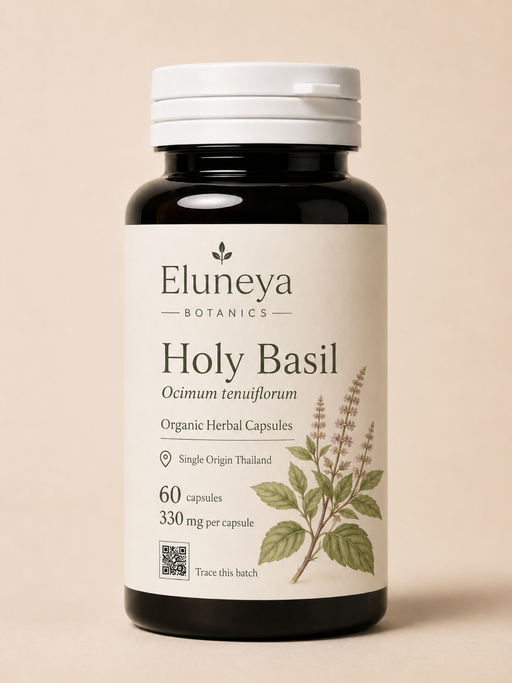
Ingredient availability may change as we expand our formulations and partnerships.