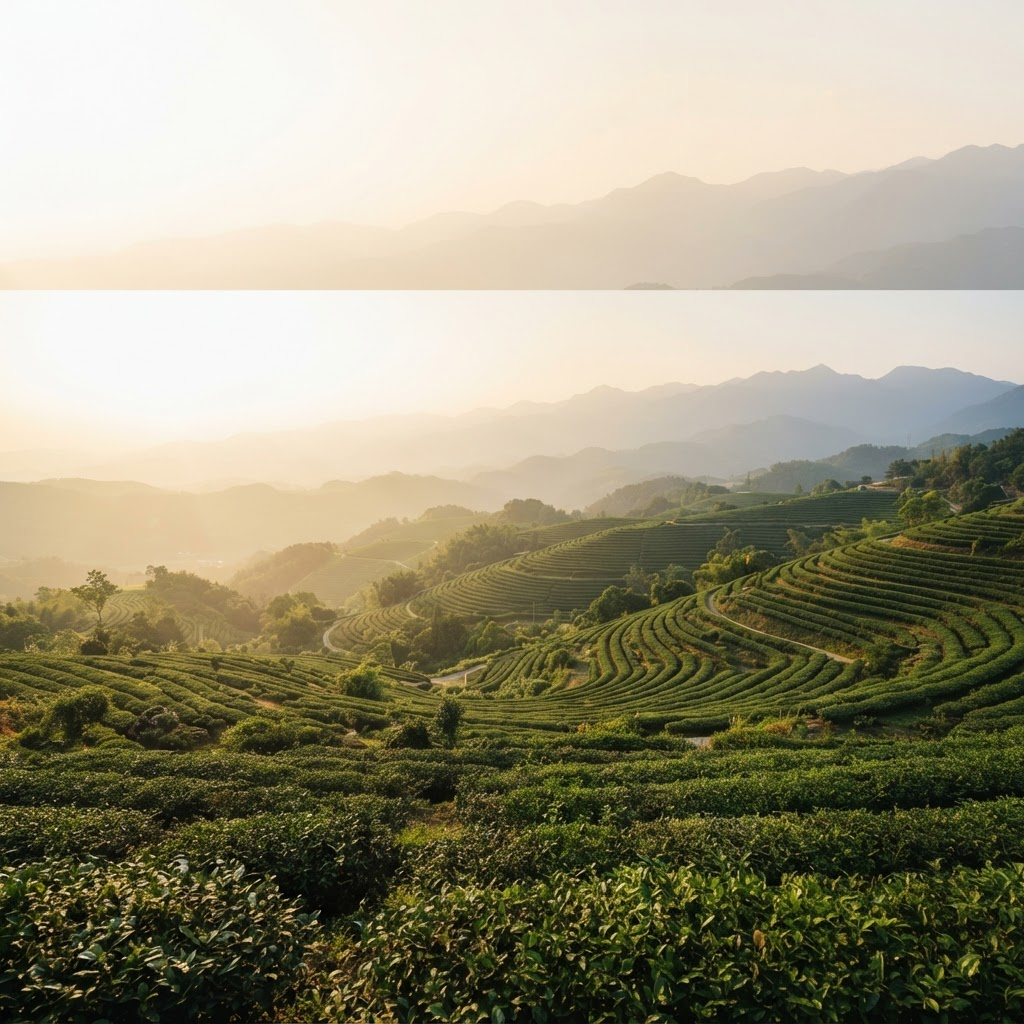
The places that shape our ingredients
Explore the regions, climates and cultivation contexts connected to the ingredients we work with.
40 origins

Chiang Mai, Thailand
Chiang Mai, Northern Thailand
Chiang Mai lies within the mountainous landscape of northern Thailand, where warm temperatures, seasonal rainfall and varied elevations create diverse growing…
- Mountain region
- Seasonal rainfall
- Smallholder cultivation
Kerala Western Ghats, India
Kerala, Western Ghats, India
The Western Ghats rise along Kerala's eastern edge, creating humid uplands, heavy seasonal rainfall and evergreen growing conditions. Elevation, forest…
- "Humid tropical highlands
- Monsoon rainfall
- Spice-growing heritage
Central Highlands, Sri Lanka
Central Highlands, Sri Lanka
The Central Highlands form a cooler, elevated landscape within tropical Sri Lanka. Mist, rainfall and strong differences in altitude create distinct…
- "Cool tropical highlands
- Tea-covered slopes
- Seasonal mist
Yunnan, China
Yunnan, Southwest China
Yunnan stretches from subtropical valleys to high mountain zones, creating one of Asia's most varied agricultural and botanical environments. Differences in…
- "Mountain biodiversity
- Tea-growing heritage
- Subtropical to alpine climates
Uji, Kyoto, Japan
Uji, Kyoto, Japan
Located south of Kyoto, Uji combines gently rolling tea-growing landscapes with a temperate seasonal climate. Its long tea history is closely connected to…
- "Historic tea region
- Tencha and matcha traditions
- Careful shade cultivation
Jeju Island, South Korea
Jeju Island, South Korea
Jeju is a volcanic island with porous soils, abundant rainfall, ocean influence and persistent winds. These conditions create a distinctive growing environment…
- Volcanic island soils
- Maritime climate
- Green tea cultivation
Java Highlands, Indonesia
Java Highlands, Indonesia
Across Java, volcanic mountain ranges create fertile upland soils and cooler tropical growing conditions. Elevation, rainfall and volcanic geology support tea,…
- Volcanic mountain soils
- Tropical highland climate
- Tea and coffee estates
Central Highlands, Vietnam
Central Highlands, Vietnam
The Central Highlands form an elevated inland plateau with red basaltic soils and a pronounced seasonal climate. Warm days, cooler elevations and alternating…
- Basaltic highlands
- Tropical wet and dry seasons
- Coffee and pepper cultivation
Uttarakhand Himalayas, India
Uttarakhand, Indian Himalayas
Uttarakhand rises from subtropical foothills to temperate forests and alpine landscapes. Strong changes in elevation, temperature and moisture create highly…
- Himalayan elevation zones
- Medicinal and aromatic plants
- Forest and alpine habitats
Alishan, Taiwan
Alishan, Taiwan
Alishan's steep mountain landscape combines cool elevations, frequent mist, strong day-to-night temperature variation and forest influence. These conditions…
- High-mountain tea region
- Mist and cloud cover
- Steep forested slopes
Cameron Highlands, Malaysia
Cameron Highlands, Malaysia
At elevations above Malaysia's tropical lowlands, the Cameron Highlands have cooler temperatures, frequent cloud cover and abundant rainfall. Rolling slopes…
- Cool tropical highlands
- Tea-covered slopes
- Frequent mist
Darjeeling Hills, India
Darjeeling, Eastern Himalayas, India
Darjeeling occupies steep slopes in the Eastern Himalayan foothills, where altitude, mist, seasonal rainfall and cool temperatures create highly varied…
- Eastern Himalayan foothills
- Cool misty climate
- Historic tea gardens
Assam Valley, India
Assam Valley, Northeast India
The Assam Valley extends along the Brahmaputra River in northeast India. Warm temperatures, high humidity, heavy monsoon rainfall and fertile alluvial soils…
- Warm humid lowlands
- Brahmaputra floodplain
- Strong monsoon rainfall
Nilgiri Hills, India
Nilgiri Hills, Southern India
The Nilgiris rise above the plains of southern India, creating cooler temperatures, frequent mist and diverse elevations. Tea, spices, vegetables and aromatic…
- Southern mountain range
- Year-round tea production
- Eucalyptus forests
Sikkim Himalayas, India
Sikkim, Eastern Himalayas, India
Sikkim rises rapidly from subtropical valleys to alpine environments. Strong elevation changes, abundant rainfall and forest influence create distinct habitats…
- Steep Himalayan terrain
- Organic farming policies
- Cardamom cultivation
Kashmir Valley, India
Kashmir Valley, India
Surrounded by high mountain ranges, the Kashmir Valley has cold winters, warm summers and a temperate growing season unlike much of tropical South Asia. Valley…
- Temperate mountain valley
- Saffron cultivation
- Orchards and aromatic plants
Kandy Highlands, Sri Lanka
Kandy Highlands, Sri Lanka
The Kandy Highlands occupy a humid, elevated region with abundant rainfall, warm temperatures and forested slopes. Tea, pepper, cloves, nutmeg and medicinal…
- Central hill country
- Tea and spice gardens
- Humid tropical climate
Matale, Sri Lanka
Matale, Central Sri Lanka
Matale lies between Sri Lanka's central highlands and lower tropical plains. Warm temperatures, rainfall and varied elevations support mixed gardens where…
- Spice-growing valleys
- Warm humid climate
- Cinnamon and pepper gardens
Ilam Hills, Nepal
Ilam, Eastern Nepal
Ilam's rolling hills in eastern Nepal have cool elevations, abundant monsoon rainfall and frequent mist. These conditions support tea, large cardamom, ginger…
- Eastern Himalayan hills
- Tea-growing slopes
- Mist and monsoon rainfall
Eastern Himalayas, Bhutan
Eastern Himalayas, Bhutan
Bhutan's mountain terrain spans subtropical valleys, temperate forests and alpine zones. Strong elevation changes and relatively intact ecosystems create…
- Forested mountain valleys
- High biodiversity
- Traditional herbal knowledge
Mae Hong Son, Thailand
Mae Hong Son, Northern Thailand
Mae Hong Son is one of Thailand's most mountainous provinces. Elevation, forest influence and a pronounced cool season create local microclimates distinct from…
- Remote mountain province
- Forest and valley agriculture
- Ethnic farming traditions
Chiang Rai, Thailand
Chiang Rai, Northern Thailand
Chiang Rai combines lowland river valleys with mountainous districts along Thailand's northern border. Cooler elevations and seasonal rainfall support tea,…
- Northern mountain landscapes
- Tea and coffee cultivation
- Cool-season climate
Nan Highlands, Thailand
Nan, Northern Thailand
Nan's landscape is dominated by mountain ranges, narrow valleys and seasonal monsoon patterns. Differences in altitude create varied growing conditions across…
- Forested northern highlands
- Smallholder farming
- Traditional plant knowledge
Phetchabun Highlands, Thailand
Phetchabun, Central-Northern Thailand
Phetchabun lies within a long mountain basin bordered by forested ranges. Elevation and seasonal temperature differences create productive conditions for…
- Elevated valleys
- Cool-season agriculture
- Tamarind and vegetable cultivation
Bolaven Plateau, Laos
Bolaven Plateau, Southern Laos
The plateau rises above southern Laos, with basaltic soils, heavy rainfall and cooler temperatures than surrounding lowlands. Coffee, tea, spices and fruit…
- Volcanic plateau soils
- Coffee-growing region
- High rainfall
Shan Highlands, Myanmar
Shan Highlands, Myanmar
The Shan Plateau consists of broad uplands, limestone hills and valleys with cooler conditions than Myanmar's central lowlands. Seasonal rainfall and elevation…
- Elevated limestone plateau
- Tea and coffee cultivation
- Cool tropical climate
Da Lat Highlands, Vietnam
Da Lat, Central Highlands, Vietnam
Da Lat sits on the Lang Biang Plateau at high elevation, with mild temperatures, seasonal rainfall and red volcanic soils. Pine forests, valleys and managed…
- Cool tropical plateau
- Flowers and vegetables
- Tea and coffee cultivation
Ha Giang Highlands, Vietnam
Ha Giang, Northern Vietnam
Ha Giang's far northern landscape combines steep karst plateaus, deep valleys and humid mountain climates. Elevation and isolation create specialised habitats…
- Karst mountain terrain
- Ancient tea trees
- High-elevation communities
Wuyi Mountains, China
Wuyi Mountains, Fujian, China
The Wuyi range in northern Fujian has humid subtropical weather, rocky valleys and strong variation in slope and exposure. Tea gardens are interwoven with…
- Rocky mountain tea gardens
- Humid subtropical climate
- Oolong tea heritage
Huangshan, China
Huangshan, Anhui, China
The Huangshan region combines humid subtropical weather with steep forested slopes and frequent cloud or mist. Tea gardens occupy suitable lower mountain areas…
- Misty granite mountains
- Historic green tea region
- Forested slopes
Hangzhou Tea Region, China
Hangzhou, Zhejiang, China
Low hills around Hangzhou have humid summers, distinct seasons and sheltered tea-growing areas. The best-known gardens lie around West Lake, although the wider…
- Historic green tea gardens
- Humid subtropical climate
- Lake and hill landscapes
Mount Emei, China
Mount Emei, Sichuan, China
Mount Emei rises sharply from the Sichuan Basin, producing strong changes in altitude, moisture and vegetation. Humid lower slopes and mountain mist support…
- Humid sacred mountain
- Tea-growing foothills
- High biodiversity
Shizuoka, Japan
Shizuoka, Japan
Shizuoka stretches from coastal plains to mountain foothills, creating varied tea-growing conditions influenced by rainfall, elevation and maritime weather.…
- Major Japanese tea region
- Mount Fuji landscapes
- Temperate maritime climate
Kagoshima, Japan
Kagoshima, Southern Japan
Kagoshima's tea areas are shaped by a warm southern climate, volcanic soils and relatively early spring growth. Flat and gently rolling fields allow highly…
- Southern volcanic soils
- Warm tea-growing climate
- Early harvest season
Yamato Highlands, Japan
Yamato Highlands, Nara, Japan
Nara's eastern uplands have cooler inland conditions, substantial rainfall and tea fields bordered by forests. Elevation and temperature differences support…
- Historic tea-growing uplands
- Cool inland climate
- Forest-bordered fields
Boseong, South Korea
Boseong, South Korea
Boseong's southern location combines hills, abundant rainfall and maritime influence. Tea fields are arranged across sloping terrain with strong seasonal…
- Terraced tea fields
- Humid coastal influence
- Distinct seasonal climate
Crocker Range, Malaysia
Crocker Range, Sabah, Malaysia
The Crocker Range rises from Sabah's western lowlands, producing cooler elevations, heavy rainfall and forest-influenced growing environments. Agricultural…
- Tropical mountain range
- High biodiversity
- Rainforest influence
Bali Highlands, Indonesia
Bali Highlands, Indonesia
Central and northern Bali contain volcanic slopes, crater lakes and fertile upland soils. Elevation brings cooler temperatures and supports coffee, cacao,…
- Volcanic uplands
- Coffee and spice gardens
- Tropical monsoon climate
Bukidnon Highlands, Philippines
Bukidnon, Mindanao, Philippines
Bukidnon occupies a broad elevated plateau in central Mindanao. Moderate highland temperatures, rainfall and volcanic soils support coffee, cacao, fruits,…
- Elevated Mindanao plateau
- Pineapple and coffee cultivation
- Volcanic soils
Cordillera Highlands, Philippines
Cordillera, Northern Luzon, Philippines
The Cordillera region consists of steep mountain ranges, deep valleys and cool high-elevation climates. Terracing allows agriculture on slopes while forests…
- Steep mountain terraces
- Cool tropical elevations
- Indigenous farming traditions
Origin knowledge is shared at regional level. Individual supplier names, exact locations and private sourcing details are not published.